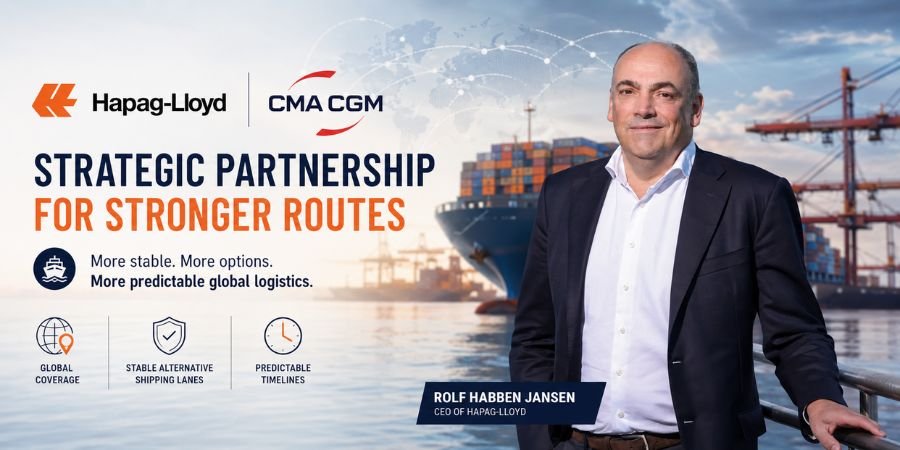
Global shipping giants Hapag-Lloyd and CMA CGM have announced a major strategic reshuffle of their international cargo networks, creating more stable and flexible shipping routes for global trade. The move, backed by Rolf Habben Jansen, is designed to improve transport reliability as supply chains continue to face geopolitical disruptions and fluctuating freight demand.
The updated shipping structure is expected to provide businesses with alternative logistics corridors across key international waters, helping importers, exporters, and e-commerce companies manage delivery schedules with greater predictability. Industry analysts say the decision could significantly impact global freight planning over the coming months.
Strategic Network Changes Aim to Reduce Supply Chain Disruptions
The newly announced Hapag-Lloyd CMA CGM Logistics Routes initiative focuses on redesigning vessel deployment and cargo flow across major trade lanes. The companies aim to reduce dependency on vulnerable maritime corridors while improving schedule consistency for customers worldwide.
Shipping operators have faced mounting pressure over the past two years due to congestion, regional conflicts, rising fuel costs, and port delays. By introducing more diversified routing options, both companies are positioning themselves to respond faster to operational disruptions.
Executives from both firms indicated that the restructuring would also improve cargo flexibility for businesses relying on long-haul international shipments between Asia, Europe, the Middle East, and the Americas.
Why the Shipping Industry Is Closely Watching This Move
The announcement is trending because global supply chain operators and e-commerce entrepreneurs are increasingly seeking stable logistics solutions in an unpredictable trade environment. Freight reliability has become a critical factor for retailers, manufacturers, and online marketplaces trying to control delivery timelines and inventory costs.
The Hapag-Lloyd CMA CGM Logistics Routes strategy could help businesses avoid costly delays by offering alternative maritime pathways and more resilient scheduling systems. Logistics experts believe diversified shipping networks may become a standard industry approach as companies continue adapting to global uncertainty.
For international sellers and third-party logistics providers, the changes may also create new opportunities to optimize freight planning and reduce dependency on single-route transport systems.
Rolf Habben Jansen Pushes for Long-Term Network Stability
Under the leadership of Rolf Habben Jansen, Hapag-Lloyd has increasingly focused on operational resilience and long-term supply chain efficiency. The latest collaboration with CMA CGM reflects a broader industry trend toward strategic partnerships and network optimization.
Analysts say large shipping alliances are now prioritizing flexibility over aggressive expansion, especially as global trade patterns continue evolving after years of market volatility. The cargo network reshuffle could also strengthen competitiveness for both companies against rival shipping operators.
Industry observers expect additional route adjustments and capacity updates to emerge in the coming quarters as the companies monitor demand trends and geopolitical developments.
What Could Happen Next for Global Cargo Networks
The Hapag-Lloyd CMA CGM Logistics Routes overhaul may influence how other global carriers redesign their own maritime operations in the near future. If the strategy successfully improves delivery consistency and reduces transit uncertainty, more shipping alliances could adopt similar network restructuring models.
As international trade volumes continue shifting, businesses across manufacturing, retail, and e-commerce sectors will likely watch closely for further announcements that could reshape the future of global logistics and cargo transportation.