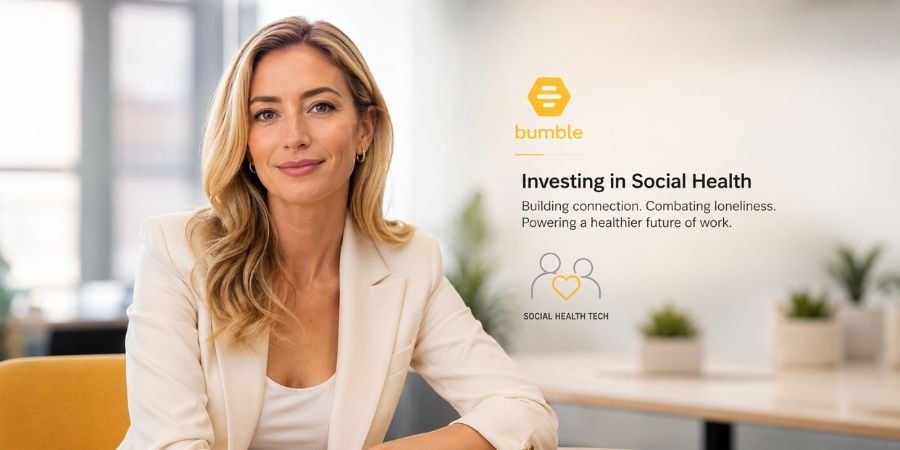
Whitney Wolfe Herd, the founder of Bumble, is trending after announcing her investment in a new “Social Health” technology startup that uses artificial intelligence to address loneliness in digital-first workplaces. The move has quickly gained attention across the tech and startup ecosystem due to its focus on mental well-being and workplace connectivity.
Investment in AI Social Health Startup Gains Attention
The newly funded startup is building AI-powered tools designed to detect and reduce feelings of isolation among employees working in remote and hybrid environments. Whitney Wolfe Herd’s involvement has amplified interest in the venture, positioning it as one of the emerging players in the growing “social health tech” category.
According to early reports, the platform aims to analyze communication patterns and engagement signals within digital workplaces to recommend personalized social interactions, team-building suggestions, and wellness interventions.
Why Whitney Wolfe Herd’s Move Is Trending
The reason Whitney Wolfe Herd’s investment is trending is closely tied to the rising global concern around workplace loneliness, especially in remote-first companies. As organizations increasingly rely on digital collaboration tools, employee isolation has become a growing challenge for productivity and mental health.
Wolfe Herd, known for building Bumble around the concept of empowering human connection, is now extending her vision into workplace well-being. Her investment is being seen as a natural extension of her long-standing focus on improving social interactions through technology.
Rising Focus on Mental Well-Being in Tech Ecosystem
The tech industry has seen a surge in startups focused on mental health, emotional intelligence, and workplace wellness. The concept of “social health” is now emerging as a key area, blending psychology with artificial intelligence to create more connected digital environments.
Experts believe this trend reflects a shift in how companies view employee engagement—not just as productivity metrics but as emotional and social well-being indicators. Whitney Wolfe Herd’s backing adds credibility and visibility to this evolving sector.
What This Means for the Future of Work
As AI continues to reshape workplaces, initiatives like this may redefine how companies address human connection in digital environments. The integration of social health tools could become a standard part of employee experience platforms in the coming years.
Looking ahead, industry watchers expect more high-profile founders and investors to enter this space, potentially accelerating innovation in AI-driven mental wellness solutions for global workforces.
Read Also: Alex Katouzian Intel Appointment 2026 Signals AI PC Revolution