Every generation produces a handful of individuals who refuse to accept that the boundaries of today must also be the boundaries of tomorrow. Their work often begins with questions that seem unreasonable, goals that appear unattainable, and ideas that challenge established wisdom. Yet it is through these pursuits that new industries emerge, technologies evolve, and the future gradually takes shape.
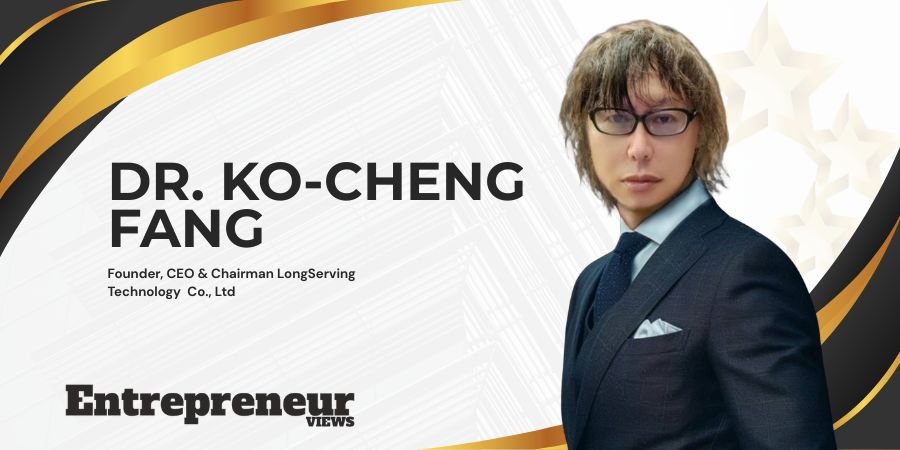
Dr. Ko-Cheng Fang’s journey is defined by that pursuit. Scientist, inventor, entrepreneur, investor, and artist, he has spent decades exploring the intersection of imagination and innovation. Through LongServing Technology, he has advanced research ranging from photonic quantum computing and advanced materials to biotechnology and luxury craftsmanship, driven by a belief that transformative breakthroughs require both technical rigor and creative vision. His story is one of persistence, curiosity, and a commitment to turning extraordinary ideas into tangible realities.
Passion Beyond Possibility
For Dr. Fang, innovation has never been driven by market demand, recognition, or financial reward. It begins with something far more fundamental: passion. He believes that the most transformative achievements in human history have emerged from individuals willing to pursue ideas that others considered impossible. To him, passion is what separates obligation from purpose and allows people to persist through repeated failures in pursuit of meaningful breakthroughs.
This philosophy became particularly evident during his pursuit of laboratory-grown Imperial Green jadeite. At the time, the challenge was regarded as nearly insurmountable. Renowned institutions, including General Electric in the United States and a leading research laboratory in China, had already attempted and failed to recreate the gemstone under laboratory conditions. Yet rather than viewing those failures as deterrents, Dr. Fang saw them as evidence that the problem had simply not been solved yet.
What followed was a journey defined by persistence. Thousands upon thousands of experiments yielded little success, but Dr. Fang remained committed to his vision. His fascination with jadeite extended beyond its physical beauty. He viewed it as a cultural treasure deeply connected to history, from its association with the Qing imperial court to iconic artifacts such as the Jadeite Cabbage preserved in Taiwan’s National Palace Museum. His determination eventually led to the successful creation of laboratory-grown Imperial Green jadeite, transforming an “impossible” challenge into reality.
That same spirit continues to drive his work in photonic quantum chips and advanced materials science. For Dr. Fang, these innovations are not merely technological pursuits but solutions to some of humanity’s most pressing challenges. He believes that overcoming the limitations of electronic chips is essential to reducing energy consumption and supporting a more sustainable technological future. In his view, passion remains the force that makes such ambitious goals achievable.
The Artist Behind the Scientist
Dr. Fang, despite his scientific and tech fame, sees himself mainly as an artist. His love for art started when he was young. First, he got into traditional Chinese painting and then branched out to watercolors and oils. With walls full of art books and sculptures, Dr. Fang learned to appreciate beauty, precision, and change from a very young age.
Art and innovation go hand in hand for him. Dr. Fang frequently likens life to sculpting, where you chip away what’s not needed to uncover something amazing. That outlook shapes how he leads his personal and professional life.
Instead of just adding new stuff, Dr. Fang stresses getting rid of what doesn’t work. Whether in lab tests, running a business, or growing as a person, he thinks success happens when we learn from mistakes and keep improving. The key is keeping only what really matters.
His approach mixes creativity and logic in all fields he works in. From refining a painting to chipping at stone to advancing tech, the method is the same. Dr. Fang proves that these forces, typically seen as opposites, actually team up to fuel discovery.
Answering Technology’s Energy Challenge
There are moments in history when the march of technology compels mankind to face its limitations. “We are in one of those moments,” Dr. Fang says. “The current age of artificial intelligence.” As the computing demands increase, the physical and practical limits of traditional electronic chips are being reached, creating an urgent need for new solutions.
“Modern data centers and semiconductor manufacturing plants already consume enormous amounts of energy,” says Dr. Fang. With the increasing speed of adoption for AI, this demand is expected to grow exponentially, which raises concerns around sustainability and infrastructure capacity, and impact on the environment. It’s not just a computational performance challenge; it’s also an energy efficiency problem.
Dr. Fang believes the answer is in photonic computing. Because light is the fastest known medium for transmitting information, photonic technologies promise to dramatically outperform traditional electronic systems while consuming much less power. But scientists have some big hurdles to overcome to bring this vision to life. More specifically, they need to be able to control light at very small wavelengths appropriate for the next generation of chip architectures.
This challenge led to the creation of X-Photon materials, a new family of photonic quantum materials that can work at nanometer-scale wavelengths. Dr. Fang and his team have spent years researching and experimenting to develop technologies to enable photonic pathways and photonic quantum gates that will be the basis for future photonic quantum chips. Since then, patent protection has been secured in the major semiconductor manufacturing areas of the world.
Dr. Fang sees this work as more than just a technological milestone. He views it as a critical step toward a future in which advanced computing can keep evolving without making unsustainable demands on global energy resources.
Building LongServing to Pursue the Impossible
When Dr. Fang founded LongServing Technology, he never intended to follow the existing technology trends. Instead, he wanted to create breakthrough innovations that could transform entire industries and tackle problems others thought were impossible.
You can see this philosophy in the company’s incredibly diverse portfolio of research efforts. From smartphone security technology and cloud systems to laboratory-grown jadeite and advanced biotechnology, LongServing always focuses on projects that require long scientific exploration and long-term commitment.
A prominent example is the successful laboratory recreation of Imperial Green jadeite by the company as natural sources were more and more restricted by mining limitations. Through scientific rigor and creative problem solving, LongServing was able to transform a rare natural resource into a reproducible technological achievement.
The company’s ambitions go far beyond materials science. He has also directed significant resources to research in biotechnology, particularly in the area of cancer treatment. LongServing is investigating new ways to target cancer cells with minimal invasive procedures by studying plant-derived bioactive compounds and advanced delivery methods.
Importantly, much of this work has been funded directly by Dr. Fang himself. He believes passionately in the importance of technology to bring about real social change and is ready to put his own money where his mouth is. With LongServing’s research endeavors expanding, Dr. Fang is on the lookout for like-minded collaborators who share his mission of tackling some of humanity’s most complex challenges.
Engineering the Intelligence of Tomorrow
Artificial intelligence is one of the defining technological movements of the century, but Dr Fang believes the current computing infrastructure is reaching its limits. He argues that as AI systems continue to evolve, the next big leap will need entirely new computational architectures capable of delivering vastly greater performance. As AI infrastructure continues to evolve, the industry is also seeing growing investment in leaders focused on next-generation computing and technology infrastructure.
He believes that photonic quantum computing is the basis of that future. These systems can employ photons instead of electrons, which could enable processing speeds thousands of times faster than traditional semiconductor technologies, while dramatically reducing energy consumption. The implications are far more than faster computers. They could transform robotics, automation, manufacturing, transportation, and many other industries.
Dr. Fang sees a future where intelligent robots are fully integrated into everyday life, working alongside humans in homes, offices, factories, and infrastructure networks. Such systems would require enormous computational power, making advances in photonic quantum technology ever more important.
This vision offers a mission and a roadmap for LongServing Technology. Driven by the belief that today’s research can shape tomorrow’s civilization, the company’s work in photonic materials, quantum computing, biotechnology and advanced engineering. Thanks to these efforts, Dr. Fang continues to push the boundaries of innovation as a means to build the future, not just respond to the current challenge.
Investing in Ideas That Endure
As an inventor and investor, Dr. Fang has a disciplined approach to innovation. In his view, public attention is a poor currency by itself. What matters is whether an idea can survive the harsh tests of scientific validation and sustainable development. He believes research and development should follow a staged approach, starting with basic research and institutional support, followed by venture capital involvement, and finally, widespread market adoption.
“It’s important to have ambition but also to be practical,” Dr. Fang stresses. Managing the budget, outsourcing wisely, working with partners, and knowing when to tap into the capital markets are all part of turning game-changing ideas into sustainable companies. He’s building technologies that can deliver long-term value and lasting impact, not chasing short-term momentum. Successful innovation, for him, is not about short-term thrill but about its ability to adapt through disciplined investment and responsible growth.
Innovation Beyond Conventional Boundaries
Dr. Fang views LongServing Technology’s approach to innovation as fundamentally different from traditional research institutions and commercially driven technology companies. While conventional innovation often progresses through cautious experimentation and incremental advances, he believes transformative breakthroughs require a willingness to look beyond established frameworks and challenge accepted assumptions.
Throughout his career, Dr. Fang has pursued concepts that many would consider unconventional, from advanced cloud computing architectures to photonic quantum technologies. He often describes innovation as the process of introducing ideas that appear ahead of their time, requiring vision, conviction, and persistence long before broader adoption becomes possible.
This mindset has influenced the company’s pursuit of technologies that seek to redefine computing, connectivity, and intelligence. For Dr. Fang, innovation is not simply about improving existing systems but about creating entirely new possibilities that can reshape how humanity interacts with technology and the world around it.
Innovation with a Purpose
Dr. Fang believes that truly meaningful innovation extends far beyond commercial success. Throughout history, he points to transformative technologies such as the steam engine, aviation, computers, and artificial intelligence as examples of innovations that fundamentally altered the trajectory of civilization. In his view, these breakthroughs succeeded because they addressed challenges that affected humanity as a whole.
He sees photonic quantum technology as the next major leap in this continuum. As artificial intelligence continues to evolve, Dr. Fang believes future generations of intelligent systems will require entirely new computational foundations capable of supporting unprecedented levels of performance and efficiency.
For him, inventors carry a responsibility that extends beyond their organizations or industries. Their work contributes to the infrastructure upon which future societies are built. Meaningful innovation, therefore, requires both technical excellence and a commitment to creating technologies that advance human progress in sustainable and responsible ways.
Balancing Vision with Strategic Execution
While creativity and imagination drive innovation, Dr. Fang believes successful implementation depends equally on strategic judgment. The ability to assess timing, market conditions, and practical constraints is essential when bringing breakthrough technologies to market.
This philosophy is evident in LongServing Technology’s commercialization strategy for photonic quantum chips. Rather than attempting to build entirely new manufacturing infrastructures from scratch, Dr. Fang advocates collaborating with existing semiconductor foundries. By leveraging established fabrication capabilities, the company can accelerate adoption while reducing costs, risks, and time-to-market.
He views cooperation as a more effective path than direct competition. Through partnerships that enable traditional semiconductor manufacturers to integrate photonic technologies alongside existing electronic processes, LongServing seeks to facilitate a smoother industry transition. For Dr. Fang, innovation succeeds not only through invention but through understanding how new technologies can coexist with and gradually transform existing ecosystems.
A Celebration of Creativity
Although LongServing Technology is best known for its scientific achievements, Dr. Fang has never viewed innovation as separate from art and culture. His passion for aesthetics, design, and creative expression continues to influence the company’s broader vision.
This perspective is particularly evident in LongServing’s expansion into luxury products and artistic ventures. To Dr. Fang, luxury goods, fine jewelry, fashion, and cultural products represent another form of innovation, one rooted in craftsmanship, beauty, and human expression.
He believes technology companies should not limit themselves to technical achievements alone. Instead, they should contribute to culture, creativity, and the enrichment of society. By combining scientific innovation with artistic sensibilities, Dr. Fang aims to position LongServing as an organization that reflects both technological excellence and humanistic values.
Recognizing the Rare Minds That Shape the Future
Dr. Fang believes that transformative innovators often face skepticism long before they receive recognition. Throughout history, many groundbreaking ideas have been dismissed or misunderstood during their early stages, only to be embraced later as society catches up with their significance.
He frequently reflects on figures such as Nikola Tesla, whose visionary inventions shaped modern technological civilization despite significant resistance and criticism during his lifetime. Dr. Fang sees a common pattern among such innovators: an ability to perceive possibilities that others cannot yet see and a willingness to pursue them despite uncertainty.
As both an inventor and investor, Dr. Fang values individuals who demonstrate originality, persistence, and a commitment to creating genuine breakthroughs rather than simply improving existing products. He believes that the most influential innovators are those willing to challenge conventional thinking while remaining focused on long-term impact.
Building for Generations, Not Quarters
For Dr. Fang, long-term societal value should always take precedence over short-term gains. While many organizations focus on imitation, adaptation, or incremental improvements, he advocates for genuine innovation that contributes to broader technological advancement.
This belief extends to intellectual property and the protection of inventors’ rights. Dr. Fang views originality as essential not only for individual success but also for the continued progress of innovation itself. By encouraging independent thinking and responsible development, he believes organizations can create technologies that benefit entire industries rather than merely capturing market share.
His vision for photonic quantum computing reflects this philosophy. Rather than seeking to disrupt existing industries through confrontation, LongServing aims to work alongside semiconductor manufacturers and support their transition toward emerging technologies. In Dr. Fang’s view, the responsibility of an inventor is not to destabilize industries but to help guide society toward a better future.
From Taiwan to the Global Innovation Stage
Scaling advanced technology from Taiwan to the international marketplace has presented both opportunities and challenges for LongServing Technology. As a relatively small organization operating in a landscape dominated by major corporations and established institutions, the company has often faced skepticism regarding the scope of its ambitions.
Yet Dr. Fang believes that innovation ultimately transcends organizational size and reputation. What matters most is the quality of the underlying science and the ability to demonstrate tangible results. Through independently developed materials, third-party verification processes, and carefully planned research milestones, LongServing has sought to establish credibility through evidence rather than publicity.
For Dr. Fang, the true test of any technology lies in performance. He remains confident that future demonstrations comparing traditional electronic chips with photonic quantum technologies will validate the advantages of LongServing’s approach and help accelerate global adoption.
Technology in Service of Humanity
Looking ahead, Dr. Fang believes that technological progress must remain firmly aligned with human values. While artificial intelligence, automation, and advanced computing will continue to transform society, he argues that innovation should always serve people rather than replace or diminish them.
This philosophy guided the development of LongServing’s X-photonic materials. Environmental sustainability, safety, and scalability were considered from the earliest stages of research. The resulting materials were designed to be non-toxic, environmentally responsible, and suitable for large-scale production.
For Dr. Fang, success cannot be measured solely by technological achievement. It must also be evaluated by the impact innovations have on society, future generations, and the environment. He believes inventors carry a responsibility to ensure that progress creates opportunities, improves lives, and contributes positively to the world that future generations will inherit.
Advancing Progress Without Losing Humanity
As automation accelerates and intelligent systems become increasingly integrated into everyday life, Dr. Fang believes technology leaders must ensure that human dignity remains at the center of progress. Innovation should empower individuals, strengthen communities, and create opportunities rather than simply pursuing efficiency at any cost.
He argues that social responsibility should be embedded within the earliest stages of research and development rather than treated as an afterthought. The technologies created today will help shape the world experienced by future generations, making ethical considerations inseparable from technical achievement.
Through environmentally conscious materials, sustainable manufacturing approaches, and a commitment to responsible innovation, Dr. Fang seeks to demonstrate that technological advancement and human-centered values can progress together. In his view, the most meaningful innovations are those that leave both society and the planet better than they found them.