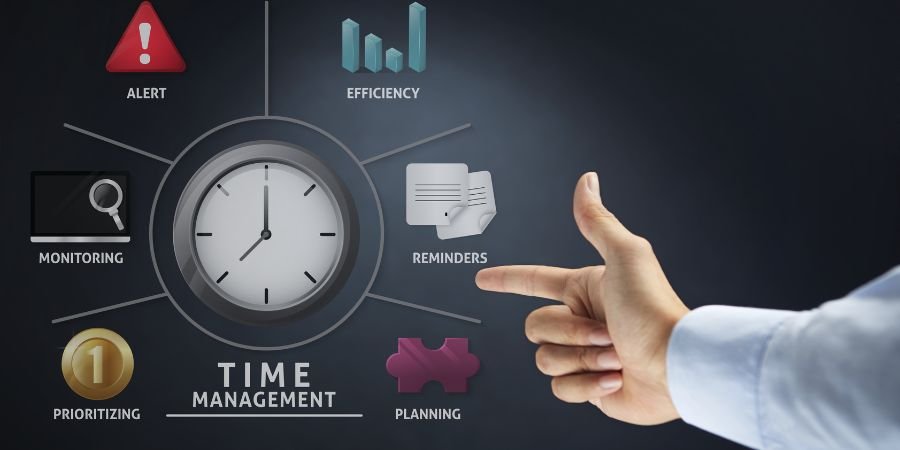
With a huge amount of digital noise all around, time management has never been more crucial in the fast-paced digital world in which we live in today. As a student, professional or entrepreneur, how much you can accomplish depends on how effectively you can manage your time. In an age of distractions vying for your attention at every turn and the demand of becoming more productive continuing to grow, learning how you can prioritize, plan and execute your daily tasks efficiently is a game changer.
Good time management isn’t just about getting more done, it’s also about doing what matters. By 2025, with work arrangements changing shape thanks to hybrid models and AI tools boosting productivity, controlling time management is no longer a nice-to-have — it becomes more of a make-or-break for success and mental health.
The Essence of Time Management Skills
What are time management skills Time management skills refer to the strategies, systems, and practices people use to control their time and reduce distractions, so they can work more efficiently. They are prioritising, scheduling your work avoiding procrastination and focussing on your goals.
But strong time management doesn’t necessarily mean filling every minute with work — it’s about keeping your schedule balanced. It’s just knowing when to push and when to rest. As you develop better time management, it allows you to have a better control of your schedule, reduce stress and lead an overall more satisfactory life.
Why It’s All About Time Management Skills in 2025
In an age of digital distraction we live in a world where time management skills are the differentiator between those who are able to accomplish their goals and have fun, and those who can’t. As remote work, increased flexibility and digital multitasking have risen in prevalence of late, structure has become harder to come by.
Recent productivity trends show that those who manage their time well get:
Higher efficiency in completing tasks.
Reduced stress, because they feel more in control.
Better work-life balance thanks to greater planning.
More creative and focused, as one won’t need to be bothered with nonsense.
In a fast-paced era of technology-driven progress and crushing workloads, it’s the tried-and-true time management habits that separate successful professionals from the rest.
Set Clear and Achievable Goals
All successful voyages start with the end in mind. When you have specific measurable goals, it focuses your time and effort. You will end up spending the majority of your time going through your little tasks but won’t have a clear goal for what to do next.
Its goals—please use SMART (Specific, Measurable, Achieveable Relevant and Time-bound) to write these. For instance, instead of “I’ll put in more efficient work” try “I’ll have my project proposal done by noon on Friday.”
Goals create clarity and with clarity comes motivation.
Prioritize Using the Eisenhower Matrix
All work isn’t created equal. One of the most powerful weapons to enhance your time management skills is, in fact, the Eisenhower Matrix, which essentially splits tasks into four categories:
Critical: Must execute these immediately.
Important, but not urgent- Put these on your schedule.
Urgent but not important -Delegate if you can.
Not urgent or important – Get rid of it.
So by applying this matrix, you can focus your energy on what really moves the needle and not get distracted by everything else.
The Night Before Planning schedule your day the night before
One of the primary time management skills is planning. The act of spending 10–15 minutes every night drawing up a clear list of your priorities for the next day can yield exponential productivity results.
Having a daily routine helps in that you don’t waste any time trying to figure out what to do next, and automatically have something to keep you busy or productive with. You could rely on digital tools, from a smartphone planner to a simple notebook — consistency matters more than the format.
Starting the day with a routine planned is getting organised rather than chaos and leads to confidence.
Break Tasks into Manageable Chunks
Big jobs can be daunting and lead to procrastination. By chunking large projects down into smaller, manageable pieces, you can create attainable milestones.
For example, if you are working on an entire presentation all at once, think instead in terms of research, design and rehearsal. With each finished section a sense of accomplishment rises; motivation is high.
It not only improves your time management but saves you from feeling tensed about a burden on your head.
Minimize Distractions and Learn to Say “No”
In 2025, there are a million and one different distractions: social media alerts, text messages, emails, internal thoughts. In order to be good at time management, you need to gain control over your environment.
Consider these strategies:
And shut those unnecessary notifications during work hours.
Schedule email time into your day.
If the tasks or meetings don’t fit within your priorities, politely decline them.
After all, every “yes” to one thing is a “no” to something else. Guard your time as though it’s the most precious thing you have — because it is.
Use Technology Wisely
Your technology can either be your time-management friend or foe. With the right tools, you can automate your drudge work, remind yourself of deadlines and keep your focus in a better place. But misuse can result in time wasted scrolling or multitasking with no progress.
Leverage tools like:
Calendar applications (Google Calendar, Outlook) for organizing and monitoring commitments.
Project planning apps (Todoist, Asana, Trello).
Work-rest balance: focus timers (pomodoro apps).
Technology can help increase the productivity through saving time and bringing intelligence in your work.
Apply the Pomodoro Technique
The Pomodoro Technique is a time management method that promotes sustained concentration. Here’s the idea – little 25 minute sessions (Pomodoros!) of focus time followed by a 5 minute break. Take a more extended break 15 or even 30 minutes after four sessions.
This technique can help you stave off burnout, stay focused and make long projects feel less daunting. You keep your energy going all day by giving your brain scheduled 60-second breaks.
Switching between resting and doing boosts mental awareness and helps maintain your pace.
Review and Reflect Regularly
Effective time management is developed through reflection. Each week, take time to evaluate what went well and where things could be improved.
Ask yourself:
Did I do the things that mattered most?
What was the most distracting thing in your life this week?
How can I change my tactics in the future?
Reflection turns experience into insight. Otherwise, you will be doomed to repeat the same unproductive patterns.
Delegate and Collaborate Effectively
You can’t—and shouldn’t—do everything yourself. Delegating is an important part of time management abilities. At work or at home, delegating some of the tasks to others lets you concentrate on what only you can do best.
To delegate effectively:
It’s all about selecting the correct person to do the job.
Provide clear instructions and expectations.
Follow up without micromanaging.
This approach drives team productivity while enabling you to keep your eye on the strategic ball.
Maintain Work-Life Balance
And in the end, strong time management skills aren’t only about productivity — they’re about balance. The consequences of overworking are fatigue, a lack of creativity, and people burning out.
Schedule downtime intentionally. Step back, do your hobbies and get the rest you need. When you recharge, you return with more energy and a clearer focus.
A well-rounded life is not a luxury — it is an essential ingredient for lasting success.
Mindset and How It Affects Mastering Time Management Skills
Your attitude dictates time management abilities. If people convince themselves that they’re in control of their time, however, they tend to make more disciplined, forward-looking choices.
Develop a groth mindset and see challenges as chances to grow. The next time something doesn’t work out, instead of attributing it to a lack of time, trace it back to your process. Were you realistic about deadlines? Did you prioritize correctly?
Give yourself the power to determine your day, rather than having it shape you.
common time management mistakes to avoid
Even with the greatest of intentions, productivity can be thwarted by bad habits. Watch out for these pitfalls:
Too much multitasking: It splits attention and limits efficiency.
Disregarding rest: Tired people make more errors and work at a slower output.
No prioritization: By doing low-value activities first, energy is wasted.
Procrastination: There is more stress later when it comes to terms with making decisions.
Perfectionism: Too much time spent perfecting tiny details is an energy suck.
By avoiding these common pitfalls, you can stay balanced and consistent in your work.
Developing Time Management Techniques for the Long Run
With automation and AI tools on the rise, the future of time management is flexibility. Even with technology covering far more of the tedious stuff, your capacity for strategy and prioritization and concentration is beyond replaceable.
In 2025 and beyond, the ability to manage time effectively will be to synchronize human creativity with digital efficiency. Winners will be those that handle time and energy — utilising technology, yes, but not leaving emotional intelligence behind.
Conclusion
Learning how to be a time-manager of the day isn’t something you can accomplish overnight. It’s an ongoing process, and it involves becoming more self-aware, disciplined and flexible. Every minute you spend actively managing your time pays off tenfold in productivity, peace, and purpose.
You forge structures for success by setting goals, focusing on them, not letting yourself become distracted, and keeping good mental hygiene. You can recover your health, friendships or any of the other scarce goods in life, and yet time is not one you get back— yet how you spend it makes up both the substance and quality of your existence.
Use your time to your advantage in 2025—so you can do more, stress less, live with intention.