Digital Health Breakthroughs that are Revolutionizing the Way We See Medicine
It’s 2025, and the advanced health technology we’re developing is now in widespread use. From AI in diagnostic to wearable health monitors and telemedecine platforms, these developments are transforming the way people can access, control and comprehend healthcare. Health system digital transformation has been advancing quickly, fueled by technology and data and increasing demand for patient-centered care.
As we are getting into the digital era, healthcare industry is also growing beyond hospitals and clinics. Technology now infiltrates into our homes, jobs and pockets in the form of mobile health apps. Let’s delve into the ways these digital advancements are changing the med world and making health care more efficient and effective.
Digital Health in 2025: E-commerce as the Go-to Digital Platform for Health Products and Services
Digital health is the practice of using digital technologies to deliver health and wellness services. It ranges from mHealth apps, to telemedicine and AI, big data analytics, and wearables.
It is 2025, and digital health has grown up. It was the COVID-19 pandemic that proved a seminal moment, forcing healthcare to rapidly embrace virtual tools. Now, those changes are being layered more or less permanently on top of the healthcare environment.
As smartphones and the internet expand, more patients are becoming self-directed health consumers who make routinely data-informed choices. Healthcare professionals are using cloud-based computing and predictive analytics to provide diagnoses that are quicker and more reliable. This convergence of technology and health has spurred something of a worldwide transition to preventive, personal- ized and participatory medicine.
Here Are the 10 Digital Health Innovations That Shaped This Decade
Artificial Intelligence in Diagnostics
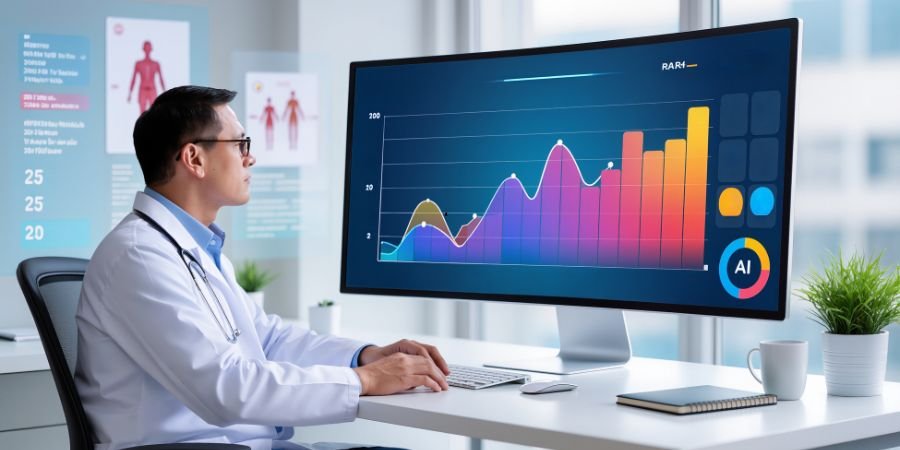
This decade, artificial intelligence is one of the most transformational digital health breakthroughs. AI systems using image recognition now sort though medical images, lab results and patient data at unprecedented speed and accuracy. From quickening the search for early-stage cancers to forecasting heart disease, AI is helping researchers and clinicians improve diagnoses and interventions with data.
Hospitals are turning to AI algorithms that read X-rays, MRIs and CT scans, helping reduce diagnostic errors and wait times. In addition, machine learning algorithms are being trained on vast troves of medical data to pick out subtle patterns that a human might miss.
Telemedicine: The New Normal
Telemedicine is now a fundamental part of healthcare access. One increasingly common scenario in this new era of telemedicine is the secure video consultation: patients getting to talk to doctors whenever and wherever they happen to be. While sparing no excuse, overpassing geographical barriers and unnecessary expenses generating a more inclusive system.
In 2025 telemedicine platforms are more advanced, with remote prescriptions for medication, mental health counseling and even AI-powered symptom checkers. So many telehealth programs are fully functioning within health systems today, offering constant virtual care beyond the hospital gates.
Wearable Health Devices
Another genre of new digital health is wearable technology. Smartwatches, fitness bands and biosensors now monitor everything from heart rate and oxygen levels to sleep quality and stress patterns. These gadgets allow people to be more proactive about their health.
What’s more, health care providers are gathering wearable data to keep an eye on patients with chronic disease. For people with diabetes, continuous glucose monitors (CGMs) and remote monitoring technologies are benefiting patient outcomes over the long-term in part by providing alerts and increasing remote oversight.
Mobile Health (mHealth) Apps
A boom in mobile health apps is developing a new kind of medicine — one that measures not just heart rate or blood pressure, but gait, tremor or voice. Over a million health apps are available worldwide, allowing patients to monitor symptoms, alert doctors and follow treatment plans with their phones.
mHealth applications are not only enhancing lifestyle management, but are also generating useful health information for researchers and policy makers. And many of these apps are easily linked to wearables, which creates an entire ecosystem around personalized health analytics.
VR Therapy and Training
Medical training, surgical practice and patient therapy is being revolutionized with virtual reality. The best surgeons today rehearse complicated procedures in VR before working on patients. That has resulted in better accuracy, less risk and better clinical outcomes.
In mental health, VR is applied to exposure therapy for treating phobias, anxiety and post-traumatic stress disorder (PTSD). Through controlled virtual environments, patients can be guided to recover in even better ways.
Blockchain for Healthcare Data Security
Data privacy has always been an issue with healthcare. Advantage It is a decentralized and secure approach for storing and sharing medical records using blockchain. This is a digital health breakthrough that makes patient records unable to be forged and kept in the hand of authorised people.
Healthcare institutions are expected to enhance records management, reduce fraud, and promote interoperability across disparate systems by integrating blockchains. It also promotes patient empowerment by allowing them to control their own data.
Robotics in Healthcare
Robotic technology has moved beyond the operating room. Robots today help with rehabilitation, care of the elderly and logistics in hospitals. The surgical system of robots offers minimally invasive surgery with greater precision and faster recovery times.
Furthermore, nursing work load and human errors have been reduced with the help of service robots such as delivering drugs or supplies. AI-based robots are also expected to become a critical solution for the lack of global healthcare workers.
Genomic Medicine and Personalized Care
Genomic medicine is the next big thing of digital health innovation. Ultimately, by examining an individual’s genome, doctors can forecast disease risks and tailor treatment plans. This personalized medicine is particularly effective in relation to cancer, cardiovascular and rare genetic diseases.
Bioinformatics and A.I. advances have dramatically sped genomic analysis and cut its cost. By 2025, precision medicine is no longer the exception — it’s the rule for cancer care.
Internet of Medical Things (IoMT)
The Internet of Medical Things links medical devices, applications and health systems through intelligent networks. Whether it be remote monitoring devices or smart inhalers and insulin pumps, IoMT allows vital signs to be continuously collected and includes real time feedback.
This is a development that contributes to preventive medicine by identifying non-healthy states of the human body at an early stage. For instance, some newfangled pacemakers are connected and can alert physicians if there is a hitch, enabling them to intervene while there’s still time. IoMT is the foundation of contemporary remote patient monitoring solutions.
Predictive Analytics and Big Data
Smart health decisions are being shaped by analytics on big data. With data from sources as diverse as electronic health records (EHRs), wearables and genomic databases, predictive models can predict disease outbreaks, demand for hospital beds and treatment outcomes.
Hospitals are turning to predictive analytics to balance staffing, allocate resources and lower readmission rates. At the same time, public health organizations are using data-driven insights to monitor epidemics and make better policy decisions. It’s turned into a digital health innovation that is crucial in addressing healthcare challenges on a massive scale.
Advantages of Adopting Digital Health Solutions
The blending of these technologies is a win:win not only for patients and providers, but for health systems too.
More Accessible: Rural and underserved community can now receive easy access to care through telemedicine and mobile applications.
Cost Savings: Automation and AI cut down on red-tape costs and delays for diagnosis.
Customized Treatment: Evidence-based technology offers customized health plans that meet each patient’s unique needs.
Healthcare: Monitoring in real time and predictive analytics allow early detection of health issues.
Increased Patient Involvement: Individuals are empowered to take their health in their own hands, and consequently they follow treatments more diligently.
These benefits help in making healthcare better connected, informed and proactive.
Challenges Facing Digital Health Adoption
There is a great potential for digital health innovations, however there are also limitations.
Data privacy: In an era when conversational AI platforms are gathering unprecedented loads of data, preserving privacy and adhering to guidelines such as those from the Health Insurance Portability and Accountability Act is critical.
Digital Divide: High-speed internet and smart devices are not available to all sections of people, resulting in the inequality for receiving healthcare.
Poor Integration: New technology doesn’t always play well with old.
Regulatory Hurdles – The speed of change can often mean the regulation does not provide developers and providers with a clear path to take.
Training and Adaptation: HCPs need ongoing training in the digital area so they can take advantage of new tools.
Solving these will be key to making certain that innovation becomes sustainable and equitably distributed healthcare advances.
The Future of Digital Health
The lines between healthcare and technology will only continue to erode going forward. And nascent fields like quantum computing, augmented reality and digital twins hold the potential for even more transformation in health.
Software-based treatments for a range of conditions, from depression to diabetes, will make further inroads in the next few years. Similarly, surgery from afar using 5G networks will allow experts to cut across continents.
The digital health revolution also signifies a move from reactive to proactive care with technological innovations being actively incorporated into everyday life. With the intersection of technology, data and human touch we are at an inflection point for intelligent, inclusive and sustainable medical care.
Conclusion: A Digital Health Revolution in Progress What is clear that a digital health revolution is already underway
Digital health technologies are transforming the world of healthcare in 2025 and beyond. They also increase access, are fast and accurate, and encourage patients to be the stewards of their own health. From AI-based diagnostics to blockchain cybersecurity, every innovation builds a smarter, more durable health care system.
But effective transformation needs the co-operation of governments, tech companies and medical experts. Through innovation and ethical leadership, the future of healthcare will not only be digital — it will be human-centred, data-driven and globally connected.
Our digital health journey is only getting started and the magnitude of what we can achieve through this technology has no bounds.
Read Also: Smart Nutrition and Diet Plans That Work