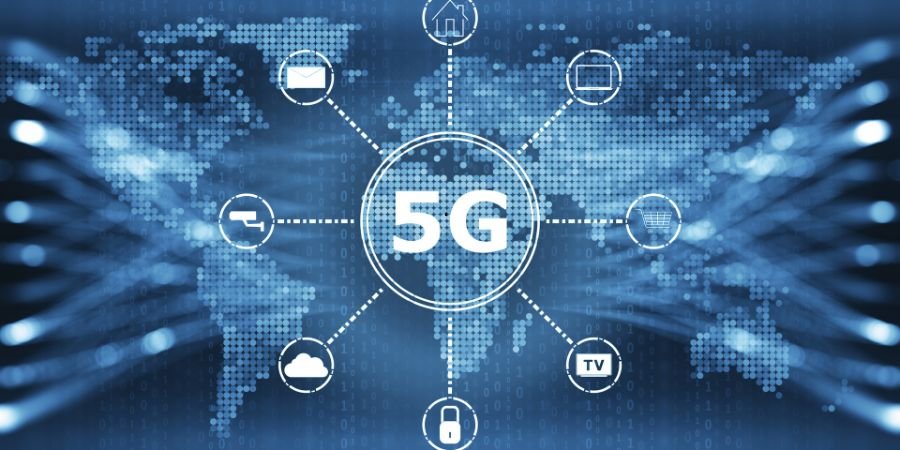
5G Technology is no longer the future, it’s already here and quickly establishing itself as a worldwide standard that literally changes everything about how we think of connection, conversations and interfacing with digital environments. From lightning fast internet to mission critical applications in healthcare, self-driving vehicles and smart cities, 5G represents a quantum leap beyond its predecessors. In this report, we’ll dig into what 5G is made of, its advantages and challenges, and how it will revolutionize industries— as well as everyday life in 2025 and beyond.
Understanding 5G: The Next Generation of Connectivity
5G, or fifth-generation wireless technology, should dwarf 4G LTE networks in speed and bandwidth. 5G, far more than its predecessors, where differences were mainly in increased speed and coverage, is characterized by three pillars: Enhanced mobile broadband (eMBB); Ultra-reliable/low-latency communication (uRLLC), which requires very fast response times; and Massive machine-type communication. These three foundations combined allow faster downloads, near instantaneous connection times as well as untold number of connected devices.
Key Features of 5G Technology
High-Speed Data Transmission
The speed of 5G technology is often discussed, and for a good reason. With potential download speeds as fast as 10 Gbps, 5G technology makes it possible for people to access ultra high-definition images from concerts and watch them on their phone in real time, play video games where all sensory aspects are virtualized or transfer giant files across the world in seconds, just to name a few examples. This ability could change the game in areas like entertainment and media, as well as telemedicine.
Low Latency for Real-Time Applications
5G technology contains reduced latency (very low time between sending and receiving data). 4G networks have a delay of about 50 milliseconds and that falls to just 1 millisecond with 5G. This enhancement will be essential for applications such as driverless cars, remote surgeries and real-time gaming where response time is critical to safety and user experience.
Massive Device Connectivity
Previous networks have been overwhelmed when too many devices are connected, but 5G can handle up to a million devices per square kilometer. This functionality will be important for the Internet of Things (IoT), smart cities and industrial automation so devices can work together efficiently and securely.
The 5G Revolution Ushers In Business Transformation
5G has many applications beyond consumer internet. Some sectors are well on their way to fundamentally transformed manufacturing processes through better interconnectivity, broadband speed data transfer and ultra-reliable communications.
Healthcare Revolutionized by 5G Technology
One of the most significant beneficiaries of 5G technology is health sector. High-speed, low-latency networks are also making it practical for remote patient monitoring, telemedicine and robotic surgeries. Doctors may, for example, perform a surgery at-a-distance with the aid of robotic real-time controlled tools, thereby mitigating travel-related risks while being able to provide assistance to those who live in remote areas. Moreover, on-wrist data analysis computed from wearable devices enables proactive patient monitoring and early diagnosis of critical disease.
5G’s Role in the Smart City
5G is transforming the way we plan cities and manage their infrastructure. Traffic, public safety and energy networks can now run more efficiently than ever before. Traffic signals can change in real-time according to traffic data and power grids can manage consumption patterns for most ideal distribution. Moreover, this higher level of connectivity enables city services to rapidly respond to incidents as they occur, enhancing the safety and quality of life for residents.
Autonomous Vehicles and 5G Technology
Self-driving vehicles depend on near real-time and low latency communication for safe driving. 5G is the infrastructure capable of allowing cars to connect with one another and traffic systems and AI services on the cloud. This live data transfer flavor is designed to result in a streamlined traffic management, lesser accidents and better road safety. Further, 5G collaboration with AI and IoT equipment will quicken the adoption of self-driving tech, such that is comes to pass sooner than most people anticipate.
Industrial Automation and Smart Manufacturing
“5G technology is enabling a greater degree of automation and efficiency in industry. By leveraging 5G enabled robots, sensors and surveillance systems, smart factories can work more efficiently by reducing the amount of downtime they experience as well as the number of errors in production. With the advent of Industry 4.0-style solutions, predictive maintenance is also more precise than ever; machines now feed performance data in real time, meaning that engineers can identify and remedy faults before they become problematic. The result is significantly increased productivity and trimmed operating costs, leading to the strong competitive advantage in global market.
Advantages of 5G to Consumers
Even as businesses are rushing to switch to 5G, consumers have a lot to look forward. From speedier internet to extraordinary new immersive experiences, 5G will change the way we live.
Ultra-Fast Streaming and Downloads
For usage, stream in 4K video and even 8K as well with no buffering needed from Internet. Gaming users enjoy cloud gaming services which offer console-quality gameplay never requiring users to purchase expensive hardware. It also means large files, software updates and moments of multimedia madness are completely ruination proof.
Enhanced Mobile Connectivity
5G provides a more reliable and steady mobile connectivity in high population areas. Tapped-phone fans report fewer dropped calls, speedier app loads, and better video call clarity. This expanded connectivity will also help accommodate the increased number of IoT devices in homes, which could include internet-connected thermostats, security cameras, and appliances.
Immersive AR and VR Experiences
Augmented Reality (AR) and Virtual Reality (VR) are the types of applications that run under highly interactive and low latency conditions. High quality games, education and virtual tourism are some of the possible applications by which consumers can immerse with 5G technology, as well as remote collaboration. For example, students can join a virtual classroom while professionals can deliver relay free remote training with an in-room experience.
Challenges and issues of 5G technology
Despite it’s revolutionary nature, some challenges need to be overcome for the uptake of 5G technology.
Infrastructure and Deployment Costs
Building those 5G networks also means spending billions of dollars on small cell towers and fiber-optic cables as well as equipment that can carry the new network. Unfortunately, this infrastructure is expensive and time-consuming to construct in both urban and rural settings. Governments must also work closely with service providers to deliver integrated services and coverage across locations.
Security and Privacy Concerns
With more people connected, there is more exposure to cyberattacks and data breaches. 5G doesn’t just let more stuff communicate at once, thus leading to a bigger attack surface for bad guys. Having strong safety procedures and privacy safeguards in place are important to maintain both end user and business security.
Compatibility and Device Limitations
Not all gadgets get along with 5G. Smartphones, tablets and IoT devices will need to be replaced for consumers to take full advantage of the speed gains promised by 5G networks. And even in the early days of deployment, coverage could be confined to big cities, with slow speeds and halfhearted connections elsewhere.
The Future of 5G: What’s Next for Mobile Networks and the Internet
The following trends will drive the development of 5G and their implications for society.
Expansion of 5G Networks Globally
5G networks are expected to dominate a sizeable share of urban and suburban areas globally by 2025. Emerging markets are also betting big on 5G infrastructure, hoping to leapfrog old systems and adopt new digital ecosystems. With increasing coverage, more consumers and businesses will be able to partake in the full potential of 5G technology.
Artificial Intelligence and IoT Integration
The fusion of 5G, artificial intelligence (AI) and the Internet of Things (IoT) will create unprecedented opportunities for innovation. And by analyzing all the data generated by IoT devices, real-time AI-powered analytics can also lead to smarter decision-making and more optimized operations. This will not only disrupt sectors such healthcare and logistics, but also agriculture and energy management.
Development of 6G and Beyond
But even as technology is still in the growth phase when it comes to 5G networks, researchers are working on 6G networks that would offer an even larger jump in speed, less latency and more connections. 6G could enable features like holographic communication, deep integration with AI and completely immersive virtual worlds. These future developments would all be built on the foundation of 5G technology.
5G Technology and its Transformational Impact
5G is more than a speed boost to our mobile internet – it is the innovation that has been promised to be given through the National Broadband Network (NBN). 5G allowed this as it supports fast data exchange, extremely low latency and many More end devices – a transformation of industries, consumers’ lives and new technologies. The impact of 5G technology is vast—from healthcare and smart cities to autonomous cars and immersive entertainment.
As we go deeper into 2025, the ubiquitous 5G networks create further space for new virtual potentials entertaining to bring closer these possibilities chained only by our limited imagination. Despite the obstacles – costs of infrastructure, security implications and device compatibility issues - the promised advantages of 5G technologies are far too ambitious to be ignored. We are on the cusp of an era of super-fast, ultra-reliable and hyperintelligent connectivity that will change the way we live, work and interact with our environment.
Read Also: Staying Safe Online: Key Cybersecurity Awareness Tips for 2025